What are the best yarns for baby items?
When making an item for a baby, we want to choose a yarn that is not only beautiful, but also comfortable, safe, and practical for everyday use. Babies' skin is much more delicate than adults' and is in constant contact with clothes, blankets, and accessories. Therefore, the yarn's composition is one of the most important factors to consider.
Many people look for "hypoallergenic" yarns, but it's important to understand what that term actually means. A hypoallergenic yarn doesn't guarantee that there will never be any reaction, but rather that it has been developed to reduce the likelihood of causing irritation or discomfort on sensitive skin.
In this article, we will explore the best fibers for knitting and crocheting for babies, and suggest some yarns that we recommend for each situation.

What should a good baby yarn have?
When choosing a baby yarn, there are some fundamental characteristics:
- Softness, so as not to irritate the skin.
- Breathability, to help regulate body temperature.
- Ease of washing, as items will be washed frequently.
- Durability, to maintain shape and softness over time.
- Low irritation potential, especially for babies with sensitive skin or a tendency to eczema.
More than choosing the softest yarn to the touch, the ideal is to find a balance between comfort, practicality, and suitability for the season.
Cotton: cool, breathable, and natural!
Cotton is one of the most recommended fibers for babies, especially for spring and summer items. Being a natural fiber, it allows the skin to breathe and helps prevent overheating. It is also generally well-tolerated by sensitive skin and does not contain lanolin, a substance found in wool that can cause discomfort in some people.
Although it has less elasticity than other fibers, cotton is excellent for bodysuits, light cardigans, hats, thin blankets, and amigurumis.
Yarn suggestions:
- Drops Safran.
- Drops Muskat.

Merino Wool: warm, breathable, and very soft!
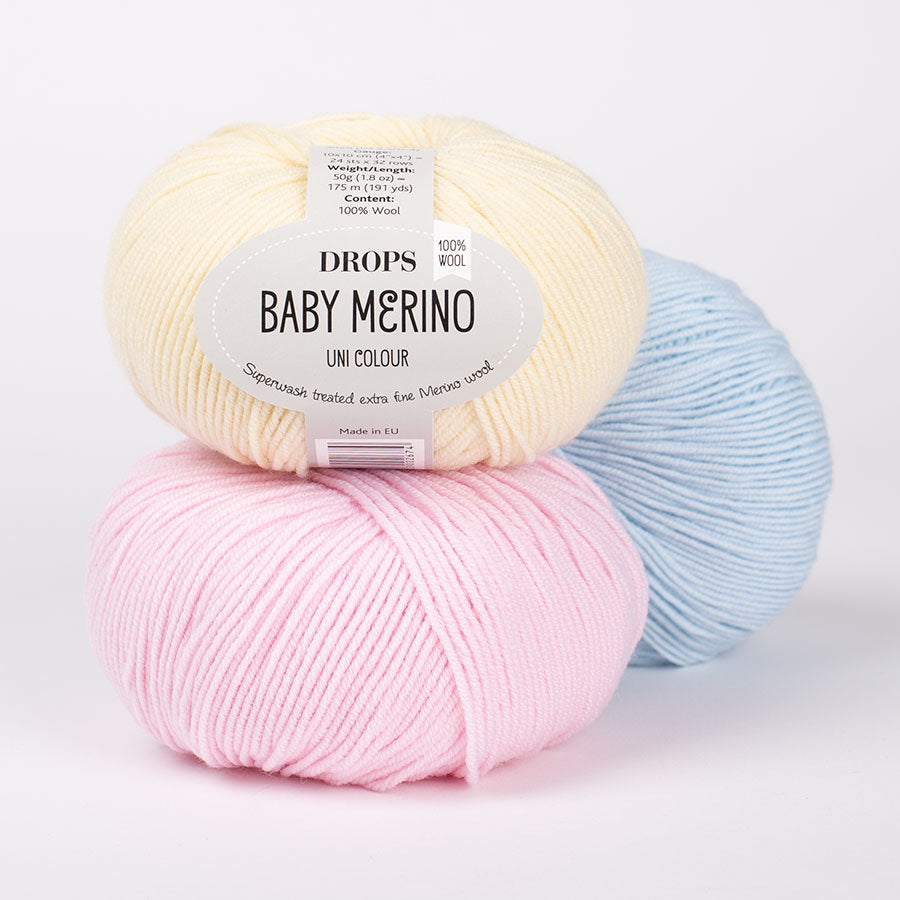
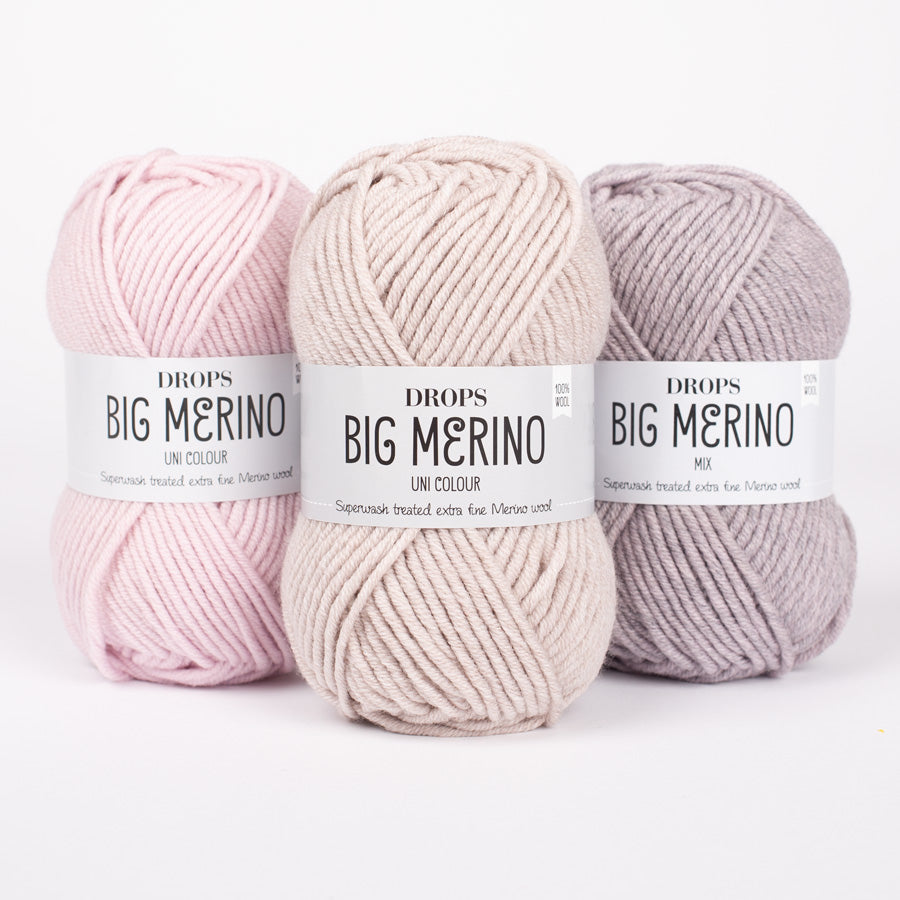
Merino wool is one of the best options for baby clothing in colder months. Unlike many traditional wools, merino wool is extremely soft and helps regulate body temperature, keeping the baby comfortable.
Another great advantage of merino is its ability to absorb moisture and release it outwards, helping to keep the skin dry.
Although some people are sensitive to wool, merino wool is generally very well-tolerated and is widely used in clothing for newborns.
Yarn suggestions:
- Drops Baby Merino.
- Drops Big Merino.
- Drops Merino Extra Fine.
Cotton and Merino Blend: the best of both worlds!
Yarns that combine cotton with merino wool offer an excellent solution for those looking for a balanced fiber. Cotton provides coolness and softness, while merino adds elasticity, thermal comfort, and an even softer touch.
They are especially suitable for mid-season and for babies with sensitive skin.
Yarn suggestion:

Acrylic for Babies: soft, practical, and hypoallergenic!
Acrylic yarns have evolved greatly over the years, and today there are options specifically developed for babies. They are extremely soft, resistant to frequent washing, and, because they are not animal fibers, they do not contain lanolin, which reduces the likelihood of causing irritation in sensitive individuals.
However, it is important to note that acrylic is not a breathable fiber like cotton or merino wool. This means it retains more heat and moisture, being less efficient at regulating body temperature. For this reason, many people prefer natural fibers for clothing that will be in direct contact with the baby's skin.
Despite this, for blankets, cardigans, and everyday items, good quality acrylics are a very practical and comfortable option. In discussions among knitters and crocheters, it is common to find the opinion that acrylic is safe and easy to care for, although many prefer natural fibers when breathability is a priority.
Yarn suggestion:
What about allergies?
There is no universally perfect fiber for all babies. Some may be more sensitive to wool, others may react to chemical finishes or detergents used to wash items.
Generally:
- Cotton is one of the safest and best-tolerated options.
- Merino is very soft and usually comfortable for most babies.
- Quality acrylic is an excellent alternative for those looking for a soft and easy-care option.
- Certifications such as OEKO-TEX Standard 100 offer an additional guarantee that the yarn has been tested for harmful substances.
Creating a handmade item for a baby is always a gesture full of affection. Choosing the right yarn ensures that this affection transforms into a comfortable, safe, and durable item, ready to accompany the first months of life.